MACAYLA LOTT

Hey, I'm Macayla! An avid indie-music consumer *cue Lord Huron + many more*, serial National Park adventurer and aspiring future dog owner. Big enthusiast of adventures, child-like wonder, slowing-down and romanticizing the things that bring joy in our lives. Most importantly, a big enthusiast of preserving your moments intentionally as ART. Honest imagery with feeling and depth.
Mt. Rainier National Park Elopement Guide: Best Locations, Seasons, Permits + Planning Tips
If you’re thinking about a Mt. Rainier National Park elopement, I’m genuinely so excited for you already. This is one of those places that doesn’t just look beautiful in photos. It feels big, alive, and a little bit unreal when you’re actually standing there. And if this is a dream on your heart for your wedding day, read on! I put together this complete Mt Rainier elopement guide to make the process feel easier.
I’m Macayla, an elopement photographer based in Utah, but spend a lot of time in the PNW photographing weddings and exploring. I hope this guide can give you a real, grounded look at what eloping at Mt. Rainier actually looks like: best locations, seasons, permits, and what to expect from the park itself!
Why Mt. Rainier National Park is One of My Favorite Places to Elope
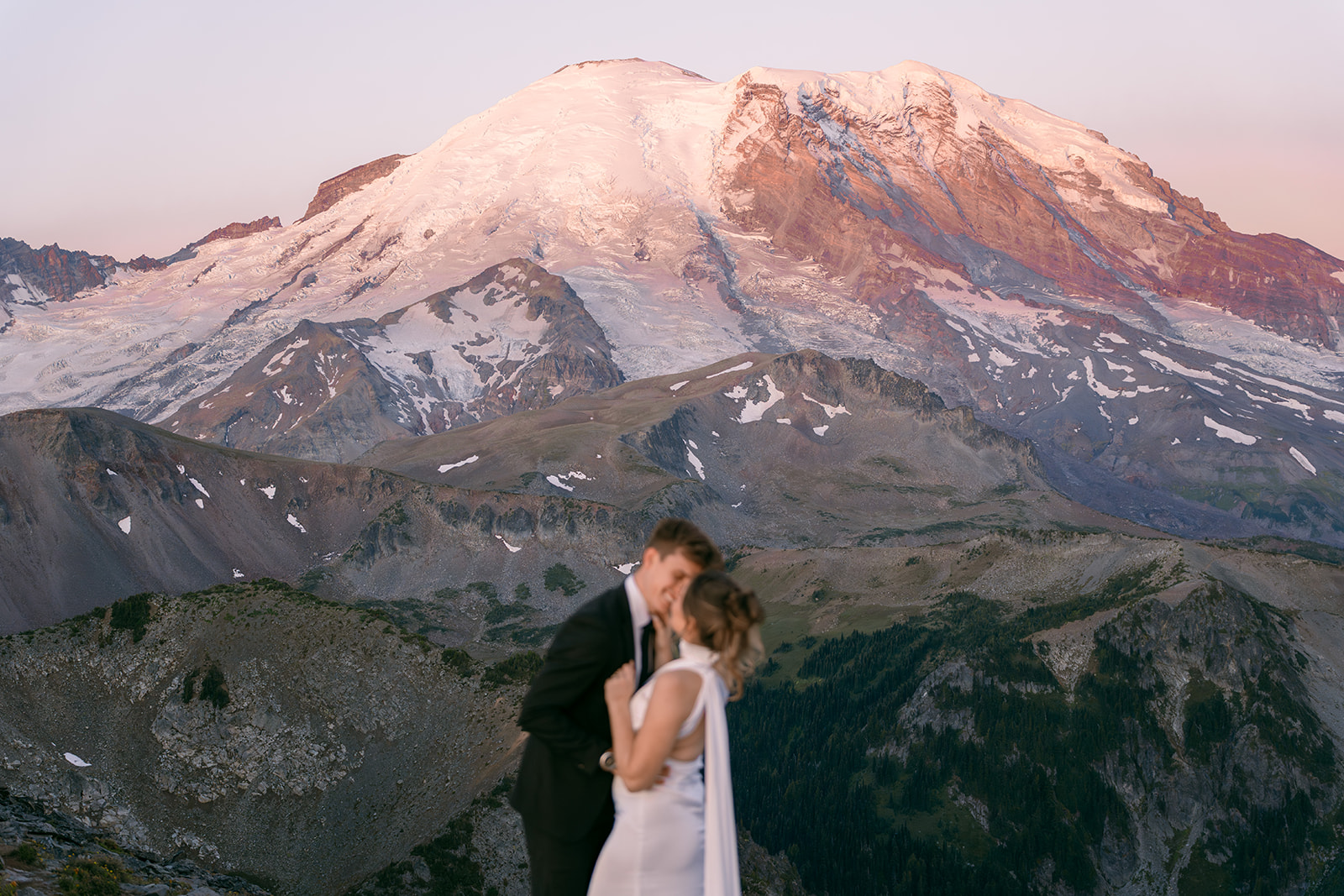
The first time I visited Mt. Rainier National Park was in 2025, and I remember pulling over constantly because I couldn’t believe how everything looked in person. All of the perfect layers of wild beauty. Wildflower meadows, glaciers, deep forests, waterfalls, and then suddenly this massive volcano just sitting in the background of everything. It’s also the kind of place where the landscape changes so quickly that it feels like you’re in multiple places in a single day.
And what really makes it special for elopements, though, is how varied the ecosystems are. You can have an alpine sunrise hike, a forest ceremony, and golden-hour wildflowers all within the same general area (and minimal hiking).
The only catch is that it’s very seasonal! Most of the park is fully accessible from early July through September, depending on snow. But outside of that window, higher elevation areas are often still buried in snow or closed entirely. And during peak summer months, it can get real busy. So make sure to think through timing and consider time of day/shoulder seasons if you can!
Best Time to Elope in Mt. Rainier National Park
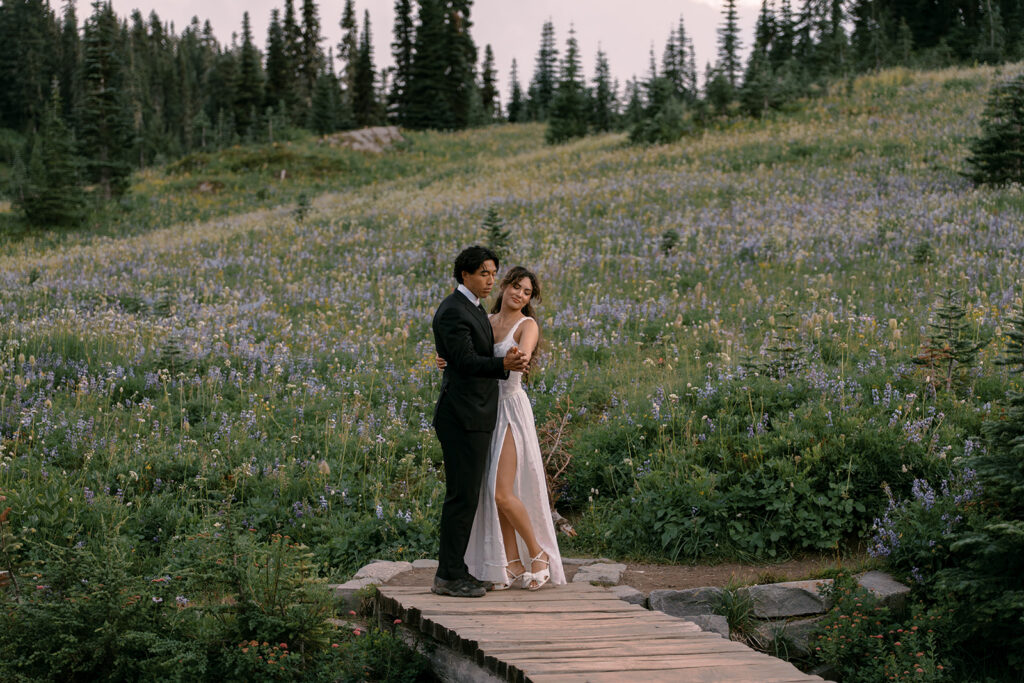
If you’re wanting the wildflower look, late July through early August is usually peak bloom season. Paradise and Sunrise both turn into bright, colorful meadows that honestly don’t feel real in person. The tradeoff is that this is also the busiest time of year.
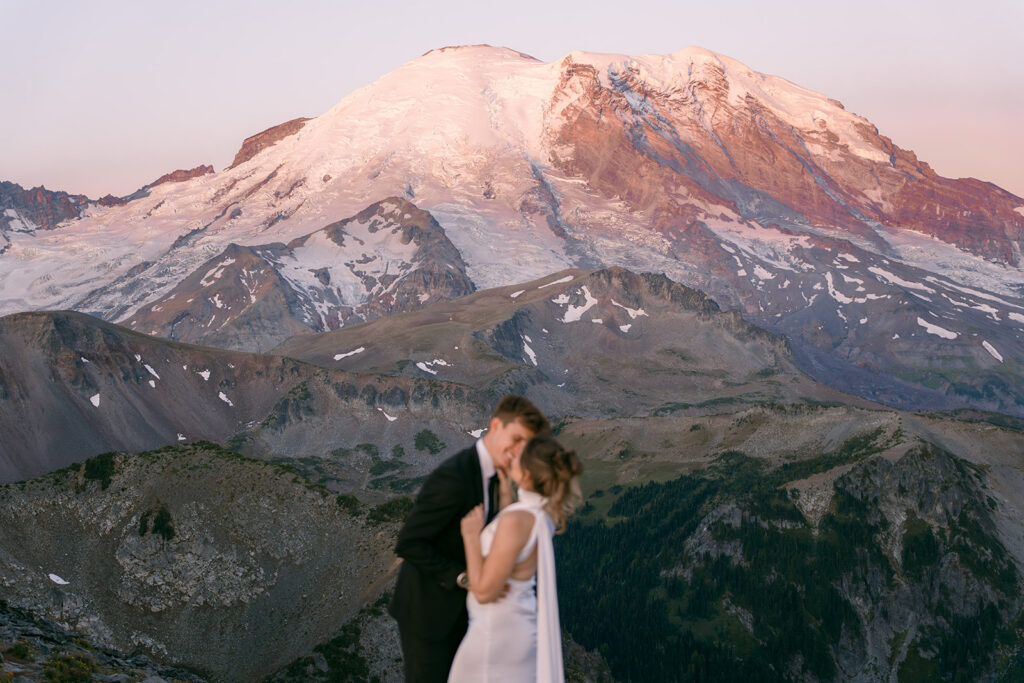
Late August through September tends to be a little quieter. You still get incredible access to alpine views, but the crowds thin out slightly, and the light starts to shift into softer, moodier tones. This is one of my favorite times to photograph here!
Outside of that window, most high-elevation areas are snow-covered or inaccessible, but some lower forest areas can still be beautiful year-round depending on the weather that day.
One thing I always tell couples: sunrise and weekday elopements here are a total game changer. Even in peak season, you can get a quieter, more intimate experience if you’re willing to start early!!
Lay of the Land: Understanding Mt. Rainier National Park
Mt. Rainier is a stratovolcano, which basically means it’s a massive, glacier-covered volcano that shapes everything around it: weather, ecosystems, and even how the light moves through the park. The park itself is divided into a few main regions, and each one feels completely different.
Paradise (on the south side) is the most well-known area. It’s full of sweeping alpine meadows, glacier views, and big sunset overlooks. It’s also one of the busiest sections of the park, especially in summer.
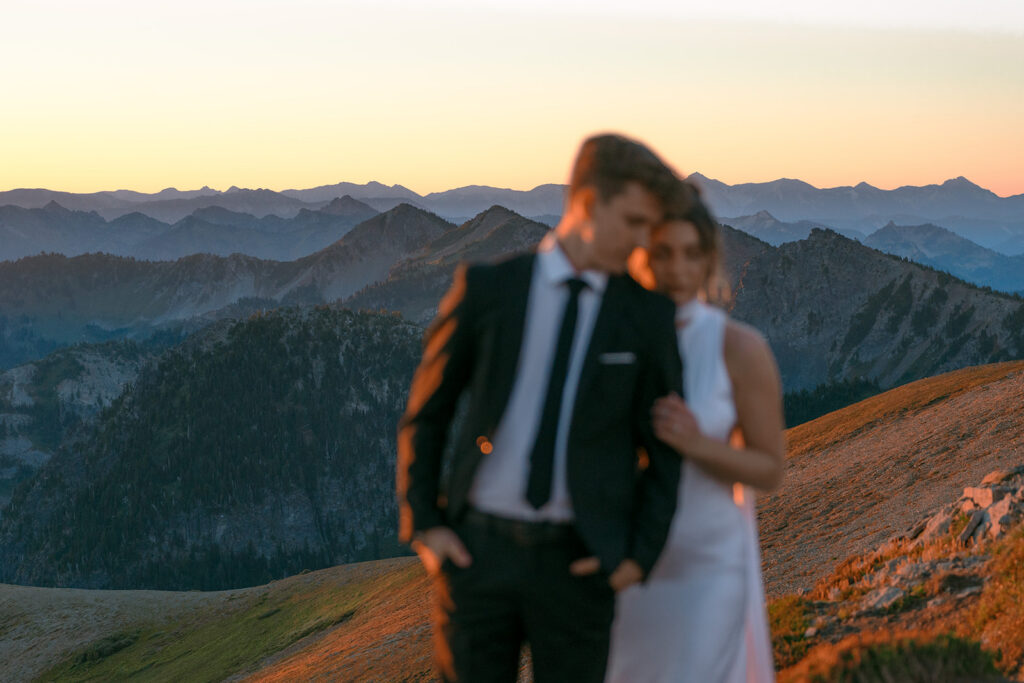
Sunrise, on the northeast side, sits at the highest accessible point in the park. This is where you’ll find ridge hikes like Mt. Fremont Fire Lookout (which is one of the most unforgettable sunrise experiences in Washington). The views stretch endlessly in every direction, with layers of mountains stacked behind each other.
Longmire is down in the southwest and feels completely different. It’s lower elevation, more forested, and filled with rivers and historic buildings. It’s also much more accessible year-round.
Ohanapecosh is in the southeast and feels like stepping into a mossy old-growth forest. It’s quieter, greener, and often less crowded than other areas.
And then there’s Carbon River and Mowich in the northwest, which lean into that lush, rainforest energy Washington is known for. These spots feel remote and peaceful, but they’re also more limited in access and services.
Best Places to Elope in Mt. Rainier National Park
Some of the most iconic elopement locations here include Tipsoo Lake, Paradise meadows, and Sunrise-area ridgelines like the Mt. Fremont Fire Lookout. And each gives ya a completely different version of Mt. Rainier!
Tipsoo Lake is one of the easiest and most accessible spots, especially for couples who want a simple ceremony with a reflection of the mountain in the water and wildflowers surrounding you in summer.
Mt. Fremont Fire is the best if you want a bit more adventure. The sunrise hike alone is worth it but once you reach the top, you get these unreal layered mountain views that stretch all the way to the horizon.
Paradise is perfect if you want classic alpine meadow landscapes, especially during peak wildflower season. And Sunrise offers some of the most dramatic ridge lines in the entire park.
And what I really love about Rainier is that you don’t have to pick just one version of it. You can build a full elopement day that moves between forest, alpine, and ridge-line views depending on the experience you want. Check this page out for more info on all the areas!
Weather, Wildfires, and Flexibility
Before planning, remember that Mt. Rainier is wonderfully unpredictable and chaotic (part of the reason we love her).
Wildfire smoke can roll in during late summer, and weather shifts quickly even when forecasts look perfect. In recent years, areas like Naches Peak Loop near Tipsoo have been impacted by smoke or fire conditions, which is something to keep in mind when planning.
But I actually think this is part of what makes eloping here special. Ya don’t come to Mt. Rainier for control, you come for experience and adventure.
Some days you’ll get bright wildflower meadows and clear skies. Other days you’ll get fog wrapping around the mountain and soft, moody light. Both are incredible in completely different ways.
Permits for Mt. Rainier National Park Elopements
If you’re planning a ceremony inside the park, you’ll need a special use permit if you have more than five people total. That includes you, your partner, any guests, and vendors like photographers or officiants.
The permit costs $25 and is submitted through the National Park Service. Once approved, you’ll receive a link to pay and then get your finalized permit back via email.
I always recommend submitting your application at least 4-6 months or so before your date. The earlier the better, especially in summer when things get busy since Mt. Rainier is such a popular location! To also find more information on which locations in the park accommodate guests for your ceremony, I’d highly recommend checking out this page from the NPS website!
To also find more information
Marriage License Basics in Washington
Washington has a three-day waiting period, which means you can’t legally marry until three days after you pick up your license. So if your elopement is on August 10, you’ll want to have your license by August 7.
Best Locations to Stay near Mount Rainier National Parks
South Side
- Packwood:
- A Frame Cabin with hot tub
- 7 guest A Frame cabin
- Mountain Modern Cabin
- Modern Mountain Haus accommodating 9 guests
Northeast Side
- Goose Prairie:
North Side
- Enumclaw/Snoquera:
More Fun Washington Recs!
Food
- Lucky’s Drive Inn (a fun favorite with unique seating options!)
- Marzalo Italian
- Zesty Steakhouse
- Doxsa Social House
- Harbor Cafe
- Archipelago
Activities
- Pike Place Market
- Space Needle
- Orcas Island
- Snoqualmie Falls
- Tulip Festival in Skagit Valley
- Kayaking on Lake Union
- Sailing on puget sound
Final Thoughts
A Mt. Rainier National Park elopement is one of those experiences that feels bigger than just the logistics of the day. It’s early mornings, fog lifting off the mountains, wildflowers under your feet, and views that make you go quiet in awe.
It’s never about everything going perfectly. It’s about being willing to meet the day as it is (that’s where the best stories usually come from).
I’d love to come alongside you as you think through the logistics of your day and be your photographer buddy for all the special moments to come. Head here to start a conversation!


