
MACAYLA LOTT

Hey, I'm Macayla! An avid indie-music consumer *cue Lord Huron + many more*, serial National Park adventurer and aspiring future dog owner. Big enthusiast of adventures, child-like wonder, slowing-down and romanticizing the things that bring joy in our lives. Most importantly, a big enthusiast of preserving your moments intentionally as ART. Honest imagery with feeling and depth.
Why Leave No Trace Principles Matter for Outdoor Elopements | Macayla Lott Photography
If you’ve ever spent time outdoors, you’ve probably heard the phrase “Leave No Trace”. But Leave No Trace (often shortened to LNT) isn’t just for backpackers, climbers, vanlifers, or boy scouts learning outdoor skills. It’s just as important for couples planning outdoor elopements, especially in places like national parks, wilderness areas, and public lands!
Eloping somewhere wild and beautiful is one of the most meaningful ways to celebrate your relationship. But the epic landscapes exist because they’ve been protected and respected by the people who visit them. Following Leave No Trace principles ensures those places stay just as magical for the next couple who comes along.
As an elopement photographer who spends a looooot of time working in places like the Pacific Northwest, Southern Utah, and national parks around the world, these principles are something I care deeply about. Not in a rigid, follow-the-rules-because-we’re-supposed-to kind of way…but in a let’s protect the places that make your day incredible kind of way.
Before I dive into the seven principles and what they can look like during an elopement day, it helps to understand where Leave No Trace actually came from:
A Quick History of Leave No Trace
The Leave No Trace movement began in the 1960s and 70s as outdoor recreation started booming in U.S. national parks and wilderness areas. Land managers noticed that more visitors meant more impact on fragile ecosystems, aka lots of trampled plants, litter, fire damage, and wildlife disturbances.
To help educate people about how to enjoy the outdoors responsibly, the Leave No Trace Center for Outdoor Ethics developed a set of seven guiding principles that encourage low-impact recreation! One thing I really love about this org is that they aren’t stuck in the past. As they explain on their website: “Leave No Trace continually examines, evaluates, and reshapes the Principles and conducts research to ensure that they are up to date with the latest insights from biologists, land managers, and other leaders in outdoor education.”
If ya want to explore their resources further, you can check them out here.
Now, I want to focus in on how these seven principles apply specifically to elopements in the outdoors!
The Seven Leave No Trace Principles (and What They Mean for Your Elopement)
1. Plan Ahead and Prepare
Good elopements don’t happen by accident: they happen because someone planned ahead.
This principle is especially important if you’re eloping in national parks or protected public lands, where permits and regulations are often required for ceremonies, photography, and certain activities. Some things we’ll plan ahead for include:
- Obtaining any required special use permits
- Checking seasonal closures or trail conditions
- Choosing less crowded locations or times of day
- Scheduling weekdays instead of weekends in popular parks
One guideline also says to “schedule your trip to avoid times of high use.” This is huuuuuuge for elopements in busy places like Mount Rainier or Yosemite. It’s a good one to follow for lots of r easons, but a sunrise ceremony on a Tuesday will also just feel WAY more wild and intimate than a Saturday afternoon with hundreds of tourists mingling around you.
Planning ahead also includes something as simple as packing well. An elopement packing list might include:
- Marriage License
- Black or Blue pen
- Umbrellas
- Layers
- Rain jackets
- NPS pass (if you have one and if applicable)
- Sunscreen
- Bug spray
- Phone chargers/battery packs
- Full tank of gas
- Barefoot sandals or easy slip-on shoes
- Light, breathable clothing
- Wind protection for your hair (think pins, veils with combs, or hats)
- Lots of water and electrolyte packs
- Hair + makeup touch-up supplies
- Tide Pen or similar in case of food stains
- Bear Spray (like for the Tetons)
Aaaand if you’re hiking, add:
- Trekking poles
- Camelback
- Head lamps (if hiking in the dark)
- Hiking boots
- Food and electrolytes for the trail
And here’s a bit of reassurance: as your elopement photographer, I’ll typically take care of about 80% of the planning. So, location scouting, timeline planning, logistics? I’ve got ya.
But it’s equally important that you come prepared too! Good planning will always lead to a smoother, more enjoyable experience for everyone (including the landscape around us).
And as Leave No Trace puts it: “Poor planning often results in a less enjoyable experience and damage to natural and cultural resources.”
2. Travel and Camp on Durable Surfaces
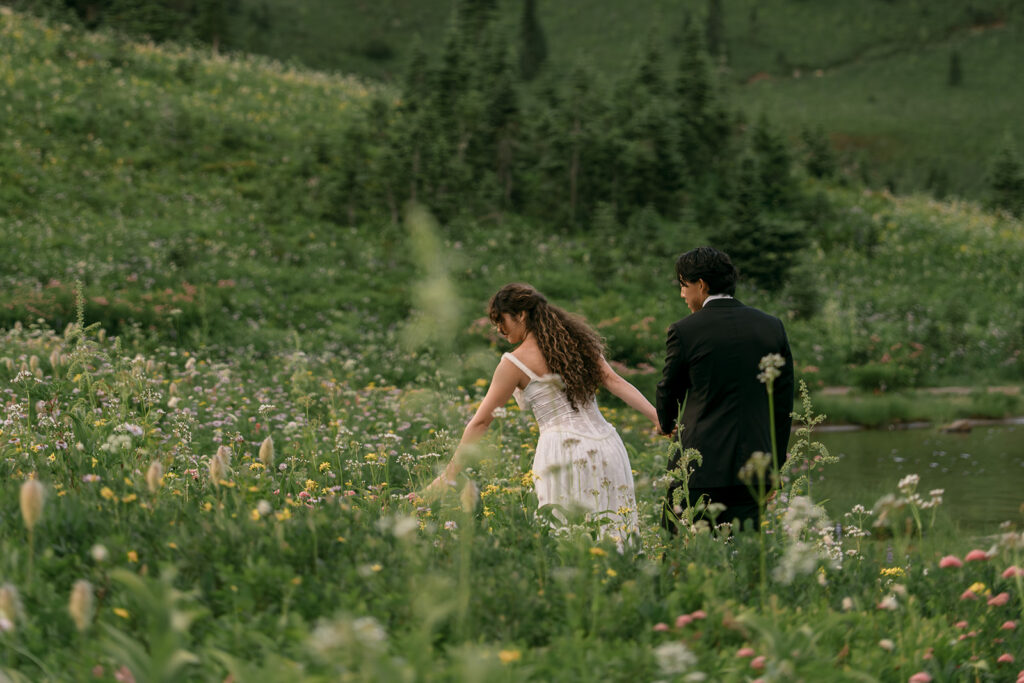
This one might sound simple, but it matters more than people realize! In fragile ecosystems (especially alpine and desert ones), just ONE person stepping off trail can damage plants that took decades to grow. So while the epic mountaintop views might be tempting, I won’t lead couples somewhere that is marked no trespassing, clearly an unofficial trail, or in delicate vegetation like wildflower fields.
Great locations are found, not made! That means we will always stay on established trails, walk single file in the middle of the trail (even when it’s a lil muddy), and avoid areas where impacts are just beginning.
And if there’s a specific view you love but access is restricted? Don’t worry. Photography has some flexibility. I can often edit in or remove surrounding vegetation in a way that protects the landscape while still giving you beautiful photos!
3. Dispose of Waste Properly
Outdoor celebrations are the BEST but they also require a little extra mindfulness! One of the core ideas behind Leave No Trace is remembering that everything we bring into nature should leave with us too. Instead of doing something like spraying champagne all over a hiking trail (so so fun, but leaves sticky residue and attracts wildlife), we can celebrate in ways that are just as memorable and much more respectful. Things like fancy canned cocktails, a small charcuterie board, trail-friendly snacks, or a picnic setup. And then everything gets packed out afterward!
4. Leave What You Find
Nature already did the decorating! We don’t need to rearrange it. One of my favorite quotes from the Leave No Trace website says: “The items we find in nature have a role to play, either in the ecosystem or the story of the landscape. Leaving what we find in place helps to preserve both.”
That means we won’t pick wildflowers, carve initials into trees, or move rocks or artifacts. Instead, we appreciate them where they are!
One of the most magical parts of eloping outdoors is being surrounded by things you’d never normally see. Instead of taking those things home, that’s what I’m here for. If you find something special—a cool rock formation, a unique plant, an interesting piece of driftwood—tell me! I’ll photograph it so it becomes part of your story and your gallery.
5. Minimize Campfire Impacts
Campfires are a cozy, memorable part of an elopement weekend, especially if you’re celebrating with friends or family! But fires are heavily regulated in many places due to wildfire risk. Before having a campfire we’ll check for seasonal fire restrictions, whether or not fires are allowed in the specific area we’ll be, and. if a designated fire ring is required.
If fires aren’t allowed, we can always pivot to alternatives like lantern-lit celebrations or cozy blankets under the stars! Just as a magic, way more respectful.

6. Respect Wildlife
Wildlife encounters are one of the most magic parts of spending time outdoors. Seeing mountain goats on a ridge or deer wandering through a meadow can feel so surreal. But I’ll always encourage us to re member that wildlife should always remain wild! Any human interference can lead to aggressive animals, relocation of wildlife, damage to ecosystems and in more extreme cases, animals being euthanized.
Alllllll of this is avoidable when we simply give animals space! This also applies to pets: I absolutely love when couples bring their dogs along for their elopement day, but they should always be on a leash and under control. That way, everyone stays safe, including the animals that live there!
7. Be Considerate of Others
Your elopement day is alllll about celebrating YOUR relationship, but we are still sharing these spaces with other people! Leave No Trace says: “One of the most important components of outdoor ethics is to maintain courtesy toward others. It helps everyone enjoy their outdoor experience.” This means things like keeping noise levels low, not blasting music on trails, keeping pets controlled, and respecting any shared viewpoints.
Many national parks specifically discourage amplified sound because noise travels surprisingly far in nature. There’s actually a great resource from the National Park Service about why sound matters in parks, which talks about how noise affects wildlife and other visitors.
Another important part of this principle is being respectful of Indigenous cultures and ancestral lands. Many of the places where I photograph elopements—including Olympic National Park and parts of Southern Utah—exist on lands with deep cultural significance. Being mindful of that history is an important part of honoring these landscapes!
Protecting the Places That Hold Your Story
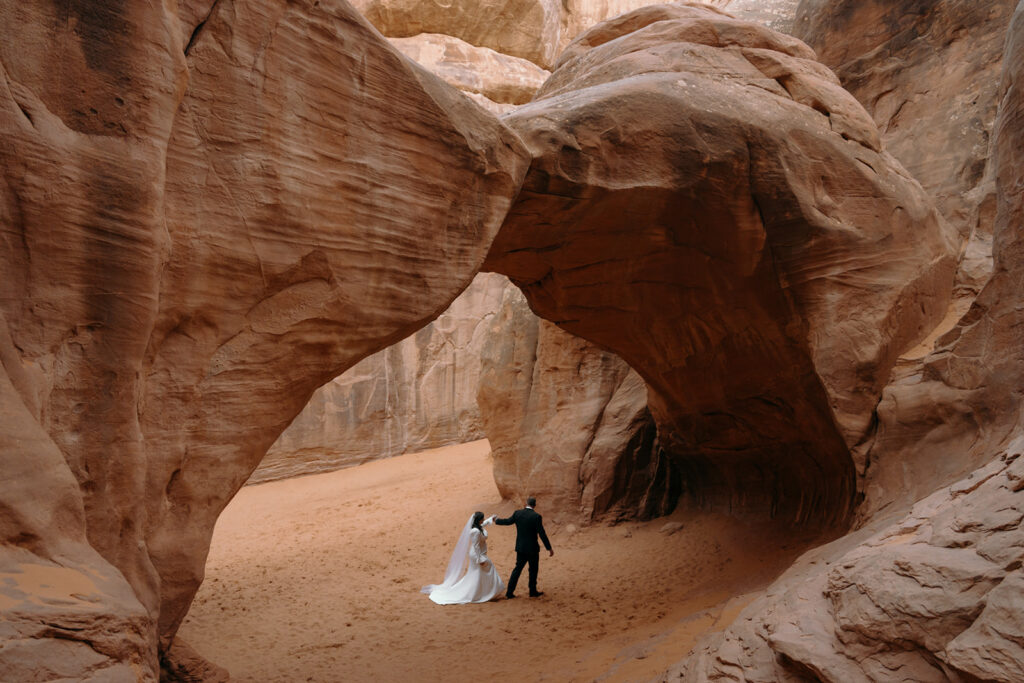
At the end of the day though, Leave No Trace isn’t about strict rules or limiting your experience. It’s about protecting the places that make your elopement meaningful. The mountains, forests, deserts, and coastlines where you exchange vows deserve the same care and respect we give to the moment itself.
This line from Leave No Trace sums it up beautifully: “Every person’s relationship with the outdoors and natural world is unique and personal. Commit to working toward a world where diversity is welcome and everyone feels safe outdoors. Work towards an outdoors in which everyone is equally included, represented, and has equal access to cultivating a personal connection with the outdoors.”
Eloping in nature is a powerful way to celebrate love, adventure, and connection. Not just with each other, but with the world around you! And when we approach it thoughtfully, we help ensure those landscapes stay wild, beautiful, and welcoming for every couple who follows the trail after you.
If you’re dreaming about an outdoor elopement in the Pacific Northwest, Utah, or somewhere across the world, I’d love to help you plan a day that feels authentic to you and respectful to the places that hold your story. Head here to inquire!


